Project Details
 UTC Project Information
 Abstract
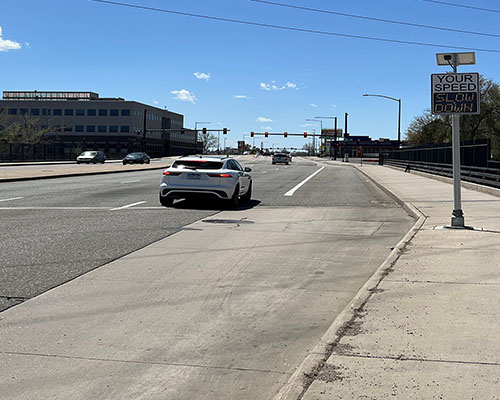 Arterial roadways serve as critical connectors in urban transportation networks, yet their design often prioritizes vehicular mobility over safety. Despite the widespread application of safety-focused infrastructure interventions on local and collector streets, similar strategies are rarely implemented on arterials due to concerns over congestion, emergency response, and operational efficiency. However, these design choices have proven to result in unsafe conditions.
This project investigates how infrastructure design interventions can improve safety on arterial roadways while addressing operational and institutional constraints. The research follows a phased approach. First, it examines the historical, regulatory, and policy factors that have limited the adoption of safety-focused interventions on arterials, including the influence of fire codes and emergency response standards. Second, it assesses the real-world impacts of infrastructure changes on speeds, crashes, and emergency response metrics. Finally, it synthesizes findings to develop actionable recommendations and a decision-making framework for arterial design.
By providing an evidence-based understanding of how design choices affect safety, mobility, and community outcomes on arterial corridors, this study aims to inform infrastructure design practices.
Project Word Files
project files
- UTC Project Information (Word, 87K)
Note to project PIs: The UTC document is limited to two pages. Also, it would be helpful if the Track Changes feature is used when editing either document above. Updated documents should be emailed to ndsu.ugpti@ndsu.edu.